
Apollo landing sites
Apollo on tonight's Moon Apollo on the Moon of
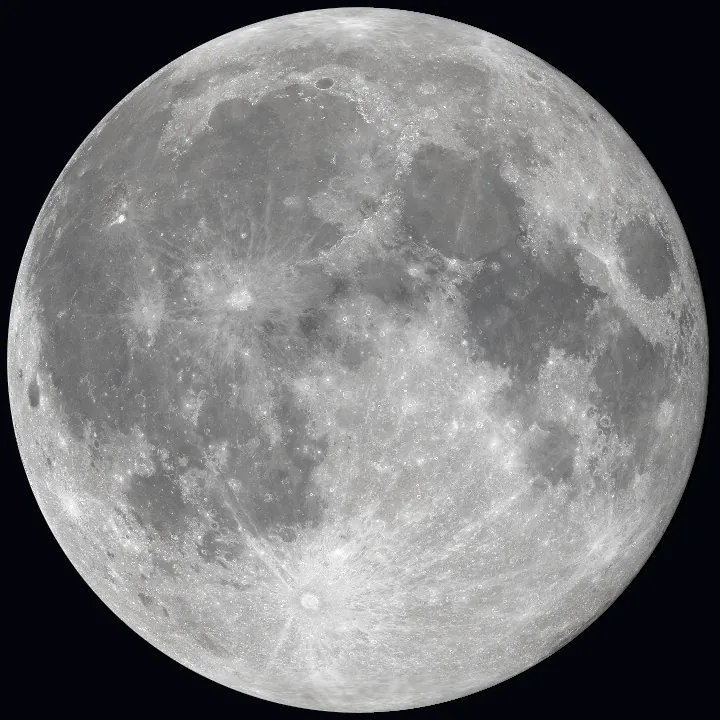
The six landing sites, and Apollo 13's planned one, placed on the Moon as it looks from where you are. Each pin is in sunlight or lunar night the way the site is right now. Pick a site for its mission dossier.
Site in sunlightSite in lunar nightPlanned, never reached
Clear-sky view: clouds and weather are not shown. Rendered from NASA Lunar Reconnaissance Orbiter maps.
The near side face on, north up, as at full Moon. With JavaScript on, this shows the Moon as it looks from your location right now.
Apollo 13
Apollo 13
Planned landing site: Fra Mauro highlands · 3.617° S, 17.550° W
- Commander
- James A. Lovell Jr.
- Command module pilot
- John L. “Jack” Swigert Jr.
- Lunar module pilot
- Fred W. Haise Jr.
- Command module
- Odyssey
- Lunar module
- Aquarius
The third landing attempt: an oxygen tank burst on the way out, and the crew rode the lunar module Aquarius around the Moon and home.
- Launched
- 11 April 197019:13 UTC
- Oxygen tank burst
- 14 April 197003:07 UTC · 55 h 55 min into the flight
- Closest to the Moon
- 254 km158 milesabove the far side · 00:21 UTC
- Farthest from Earth
- 400,171 km248,655 milesa record until 2026
- Splashdown
- 17 April 197018:07 UTC
- Mission
- 5 d 22 h 54 minAround the Moon on a free return · USS Iwo Jima
-
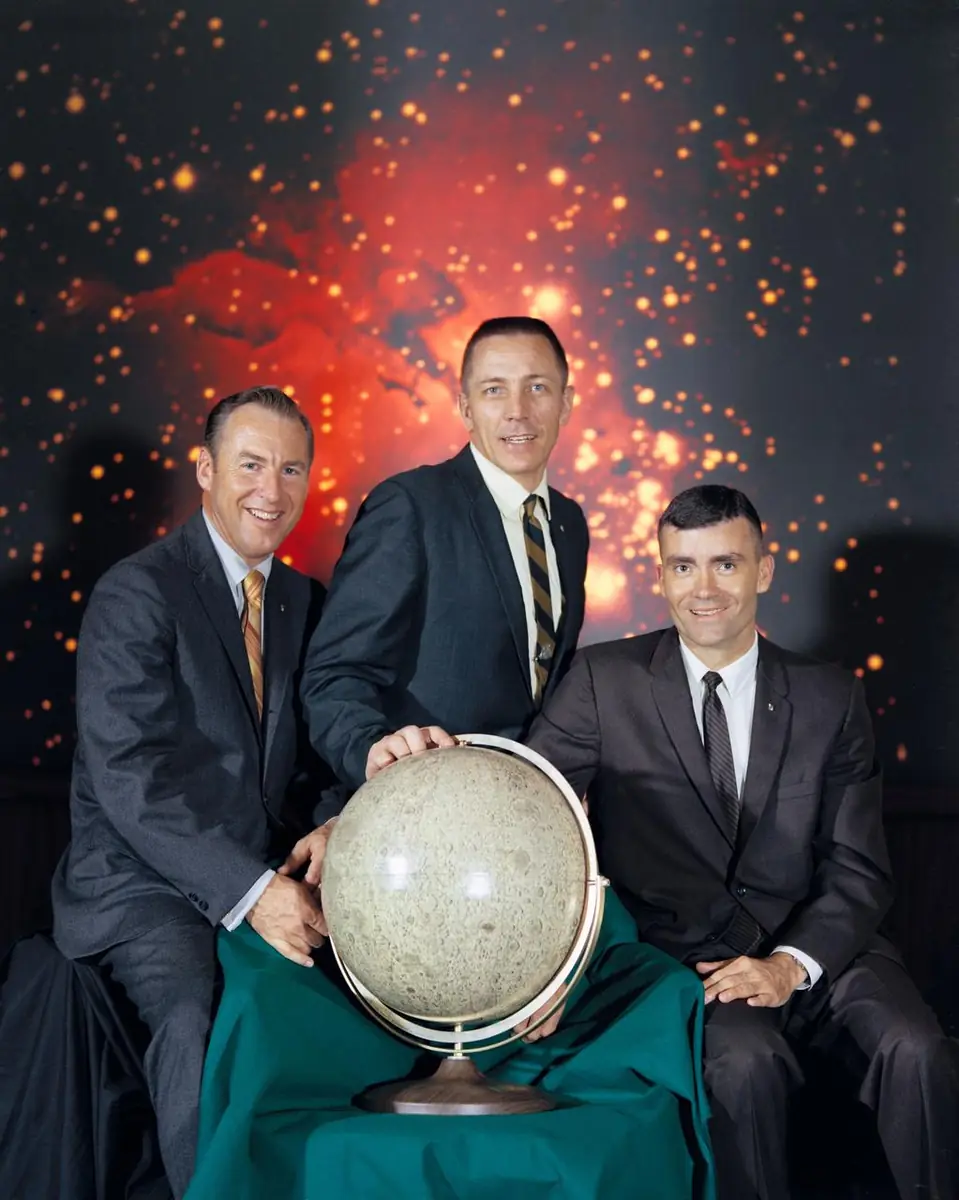
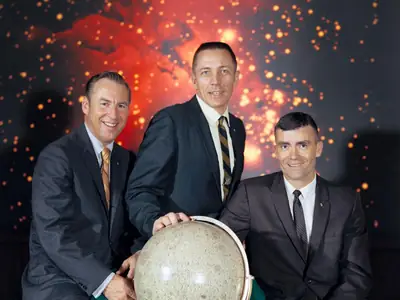 The crew that flew: Jim Lovell, Jack Swigert and Fred Haise.
-
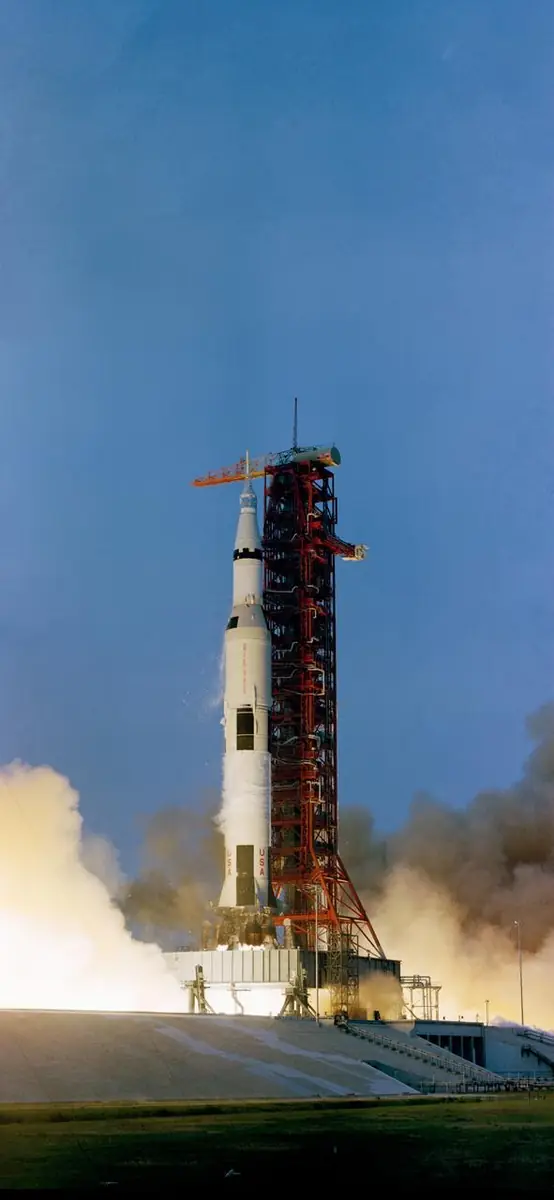
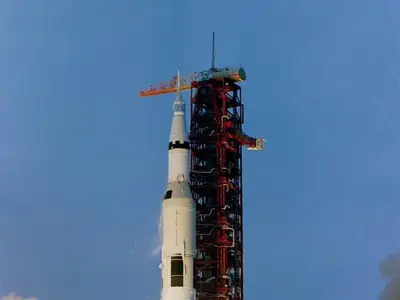 Saturn V SA-508 lifts off from Pad 39A at 2:13 p.m. EST, 11 April 1970.
-
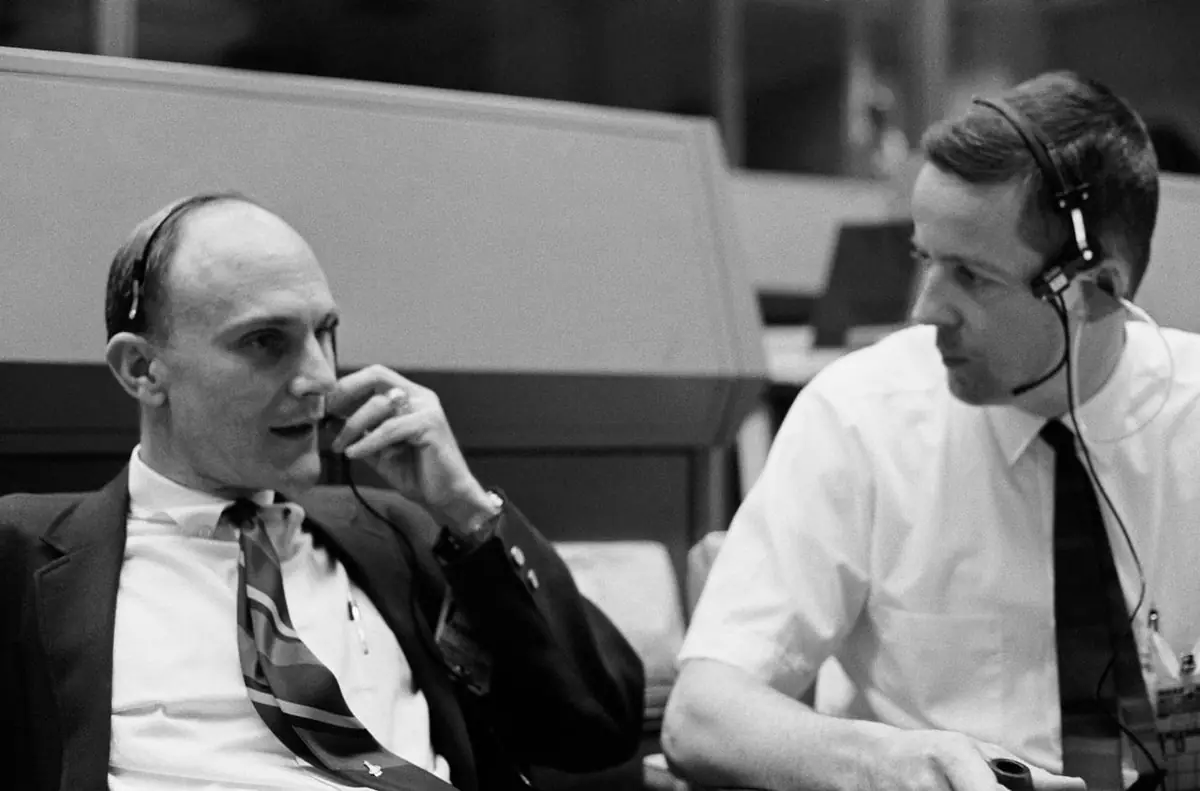
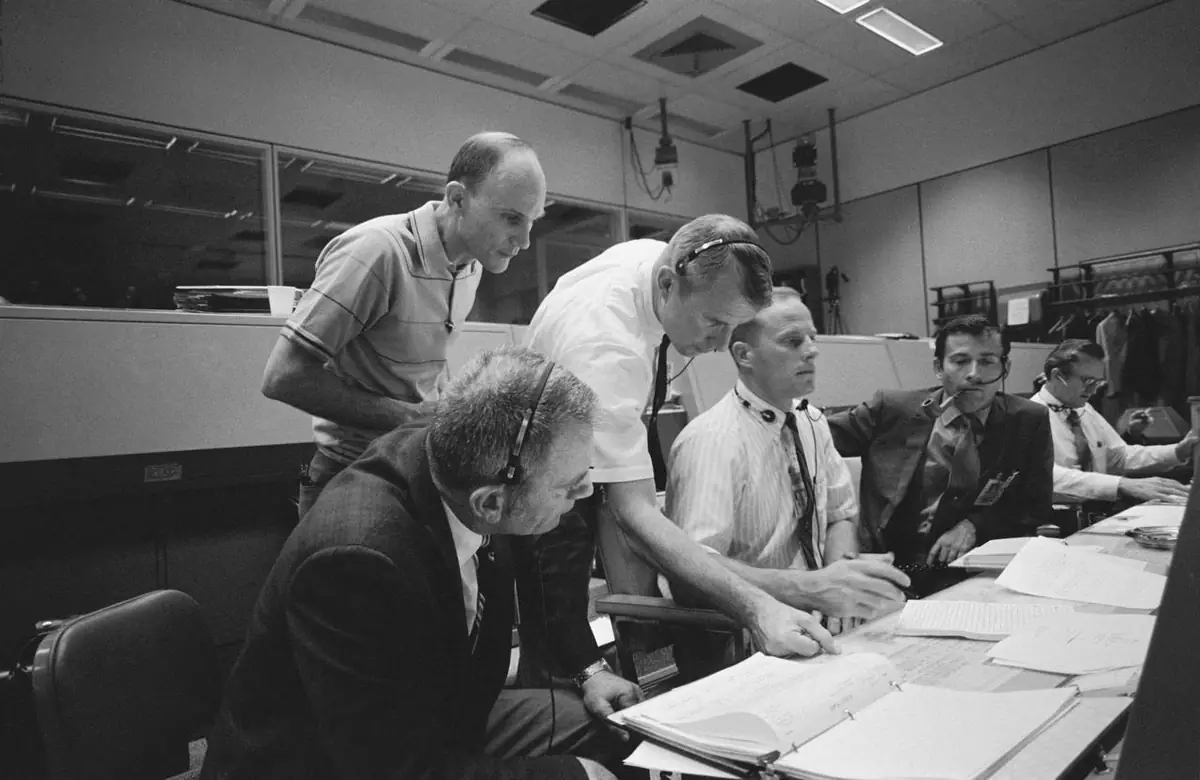
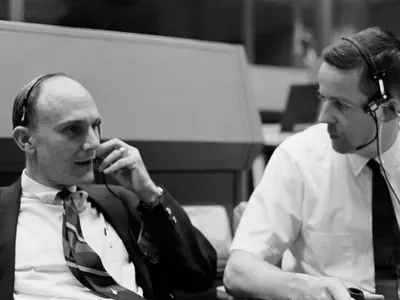 Ken Mattingly, bumped from the crew, watches the launch from Mission Control.
-
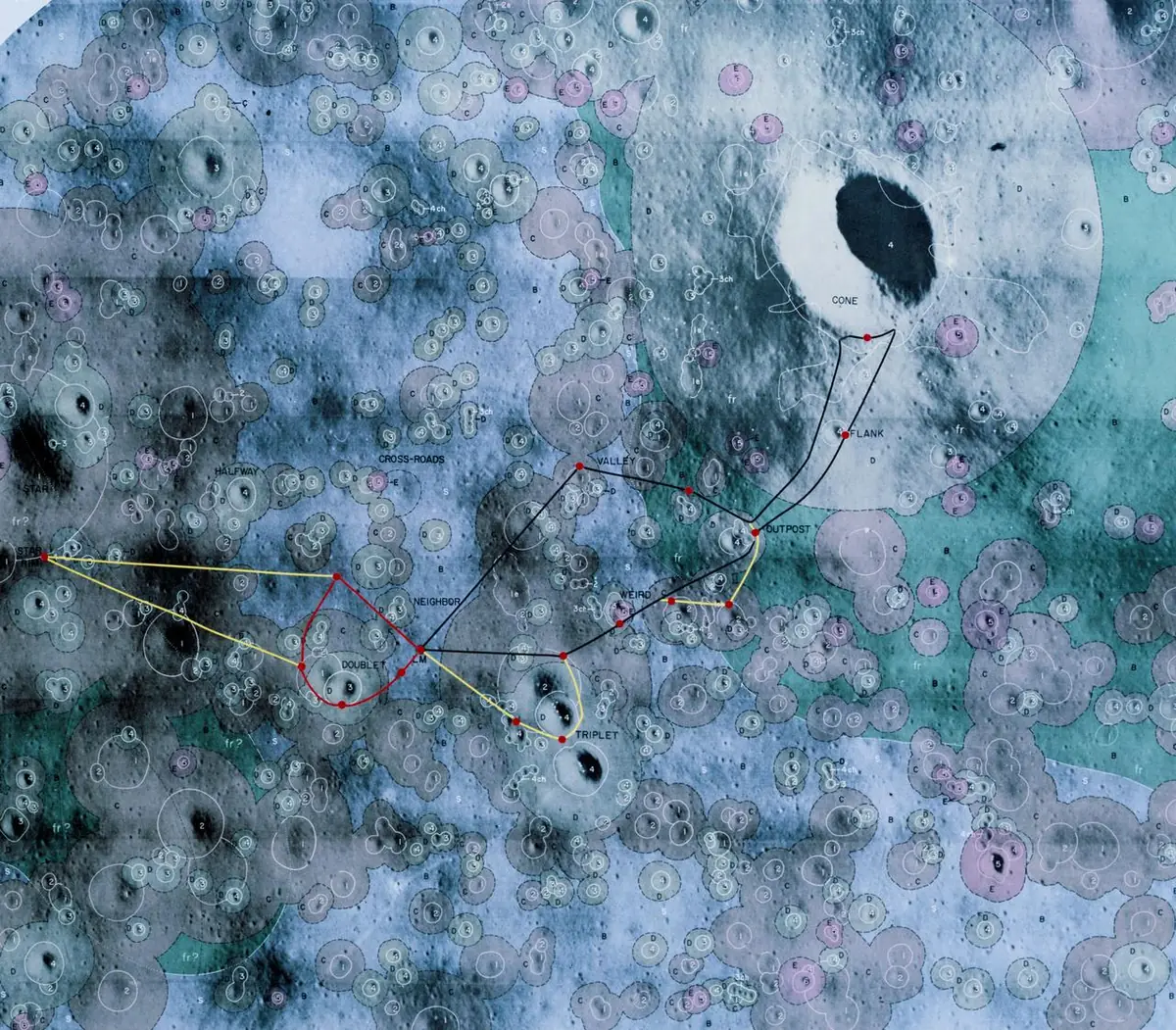
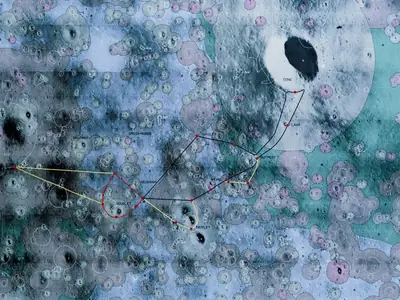 The planned Fra Mauro traverses: first EVA in red, second in black.
-
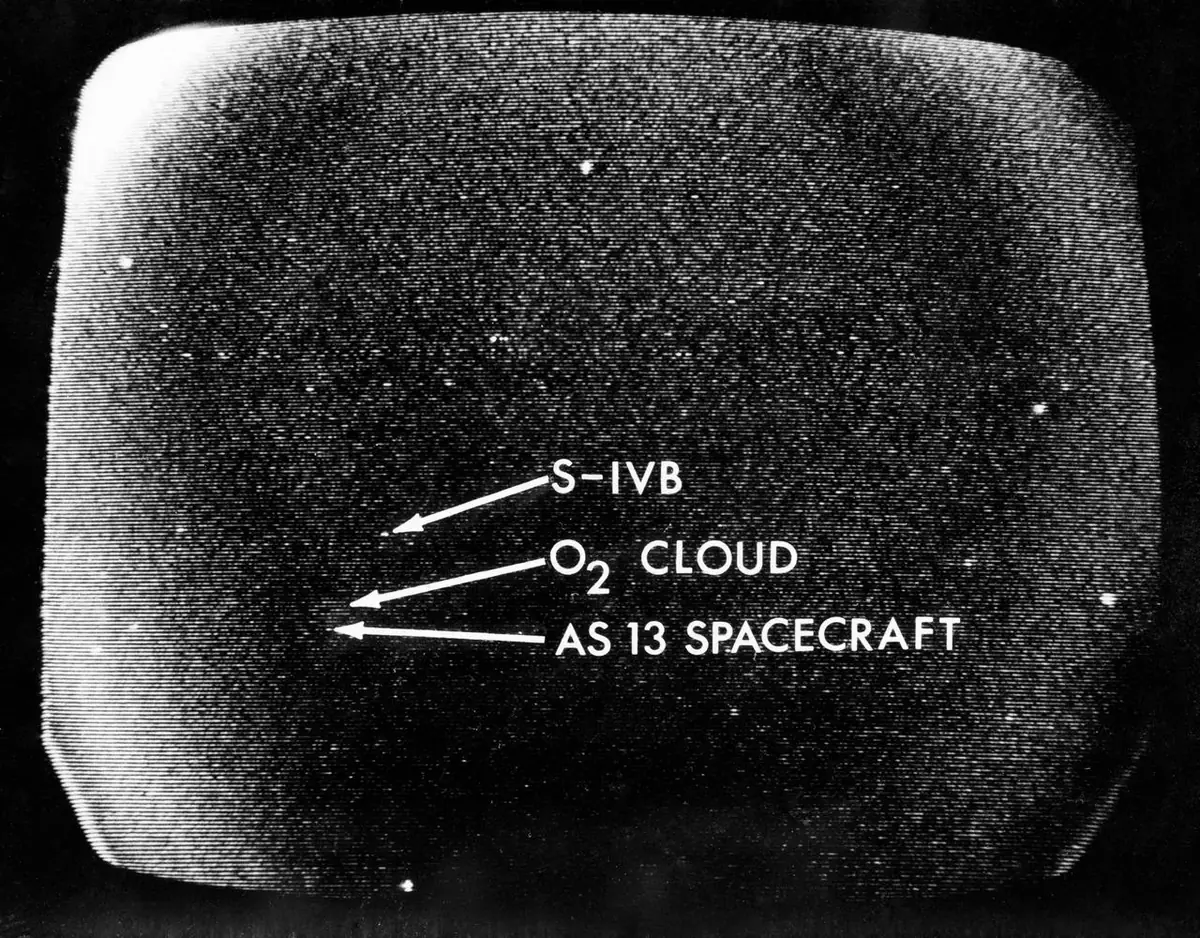
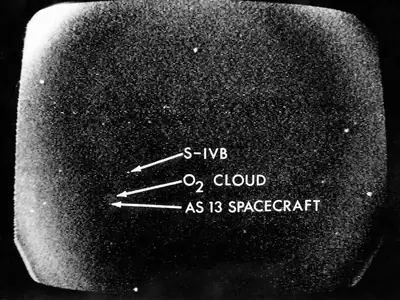 Seen by telescope from Houston: the spacecraft, the spent S-IVB and the oxygen cloud.
-
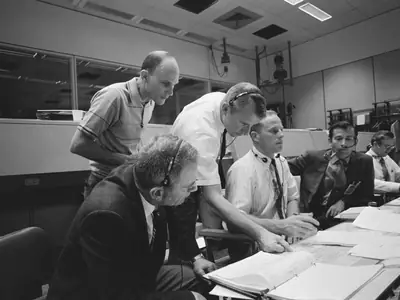 Mission Control after the accident: Slayton, Lousma and Young at the consoles.
-
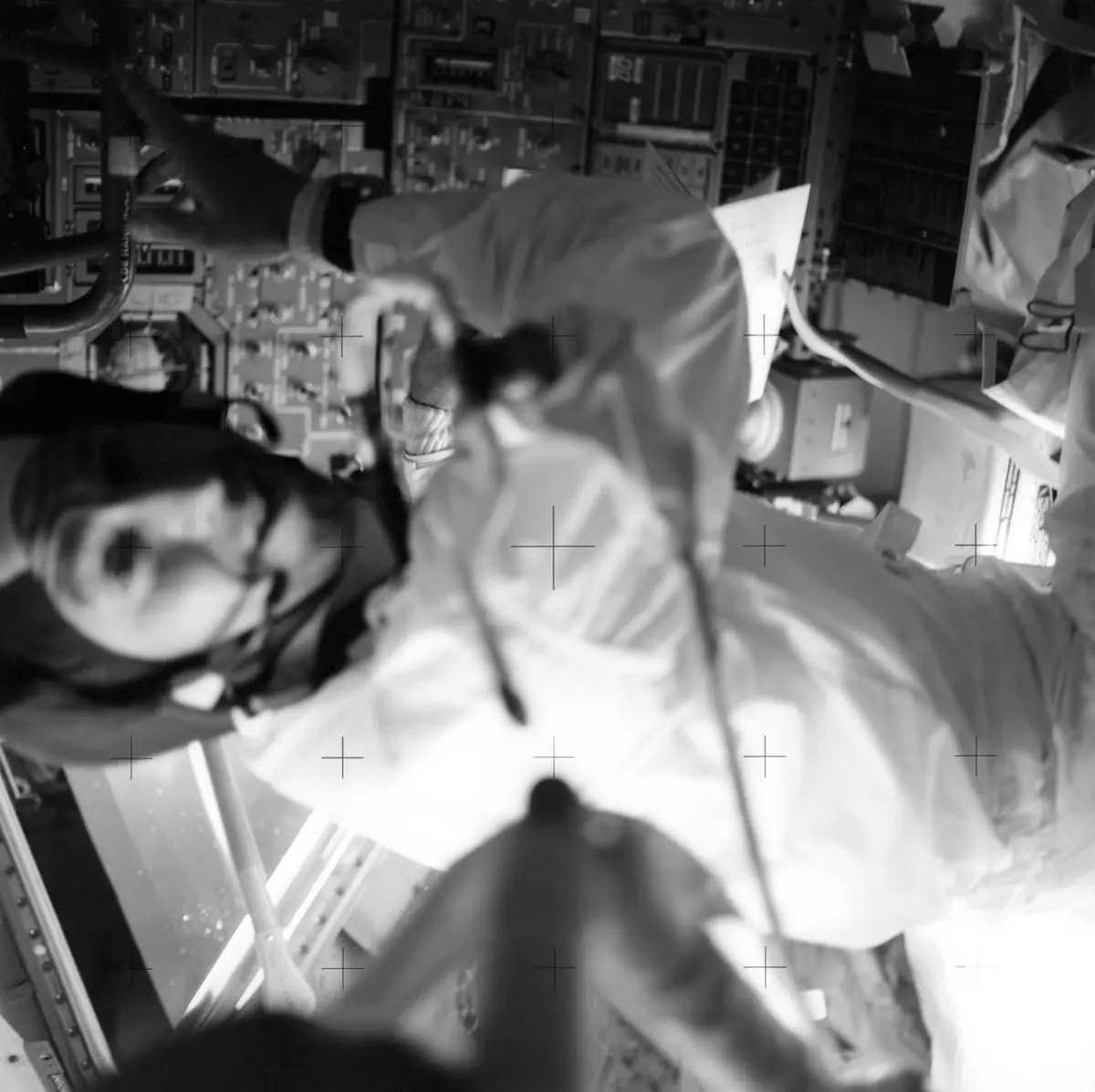
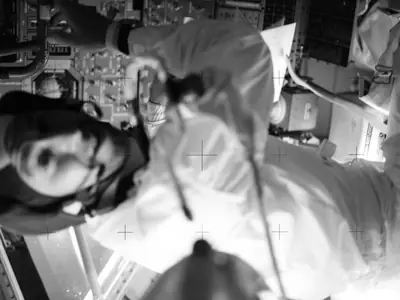 Lovell at his station in Aquarius, the lifeboat.
-
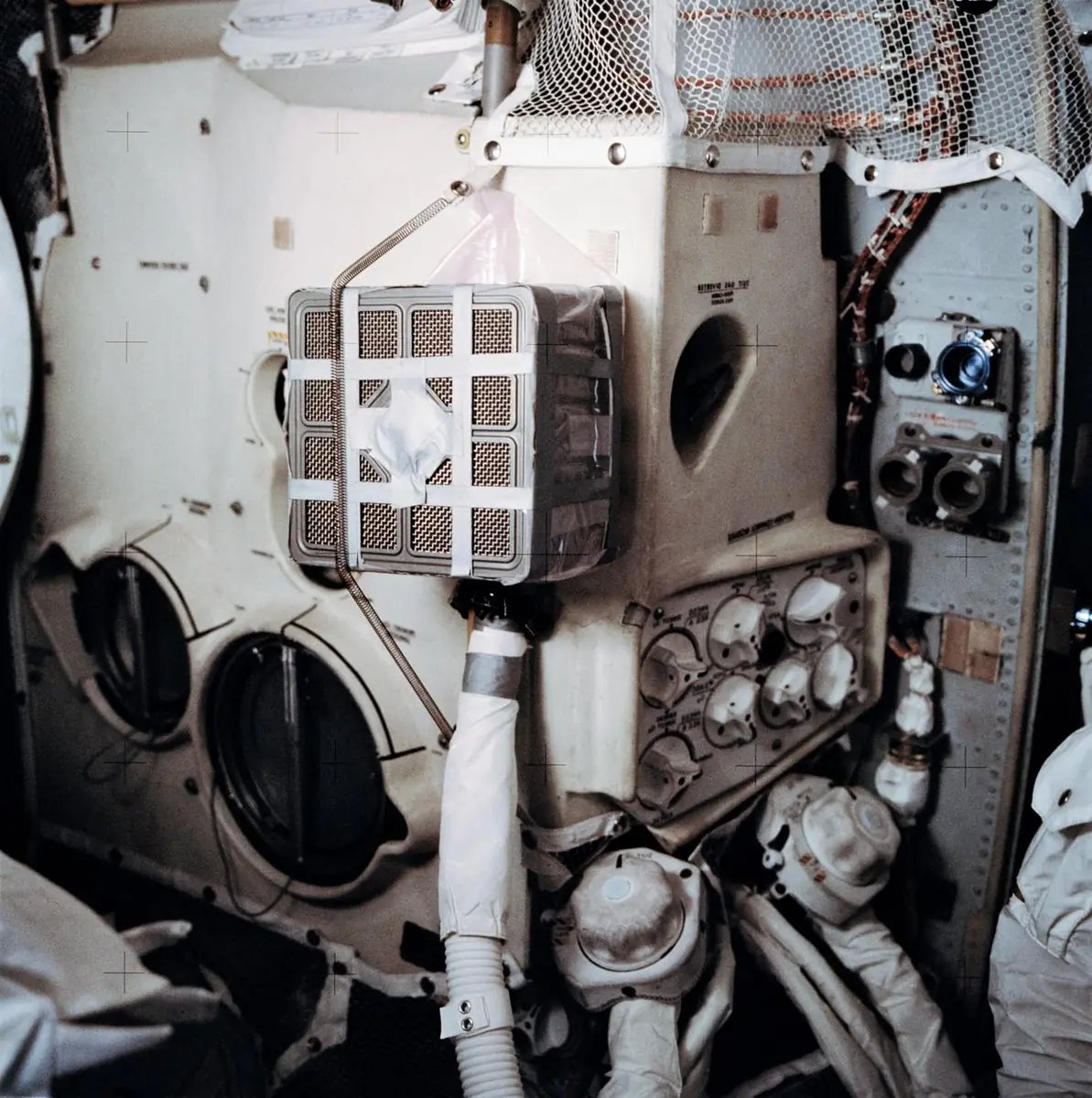
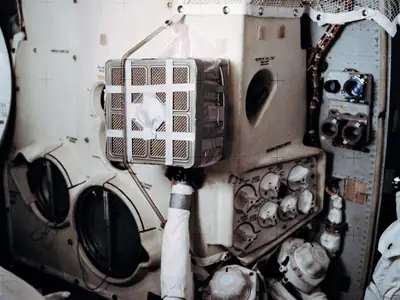 The “mailbox” in Aquarius, adapting command module canisters to scrub carbon dioxide.
-
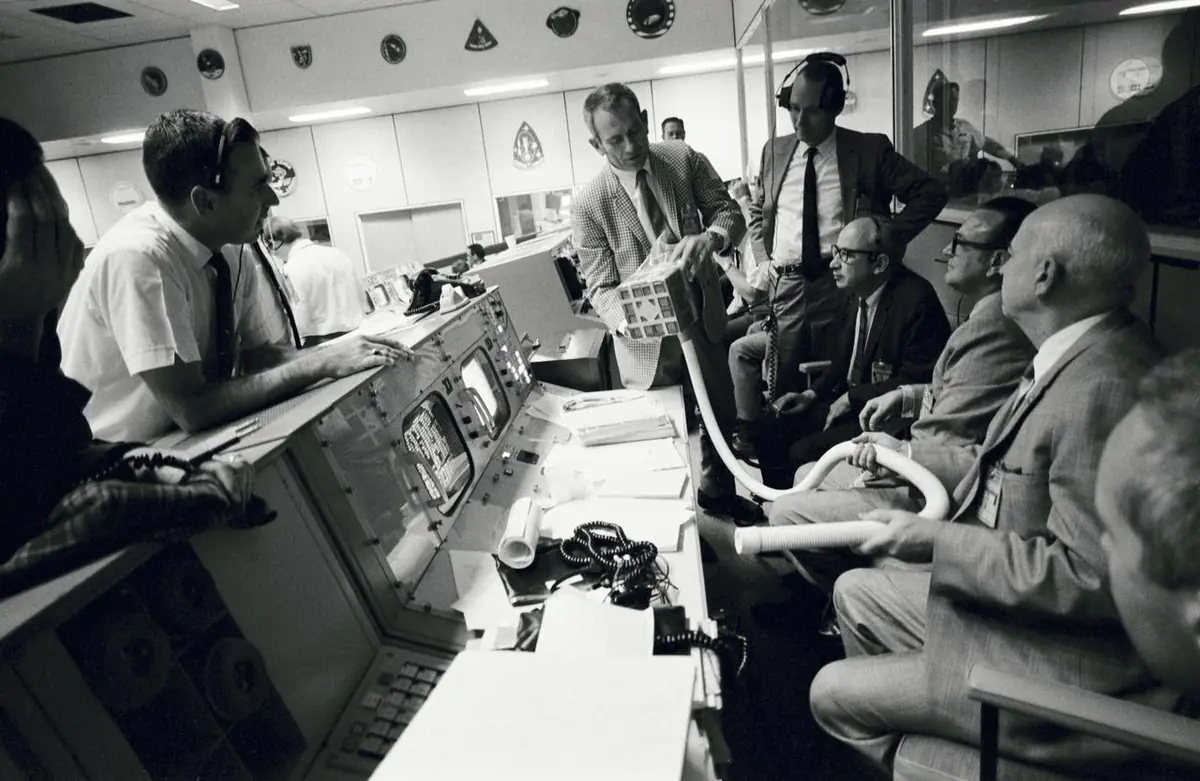
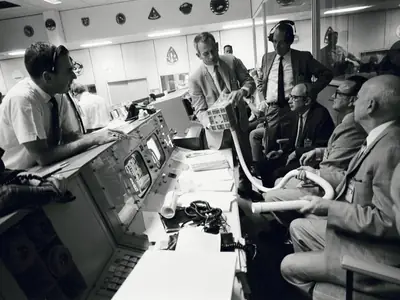 The mailbox prototype built on the ground, shown in Mission Control.
-
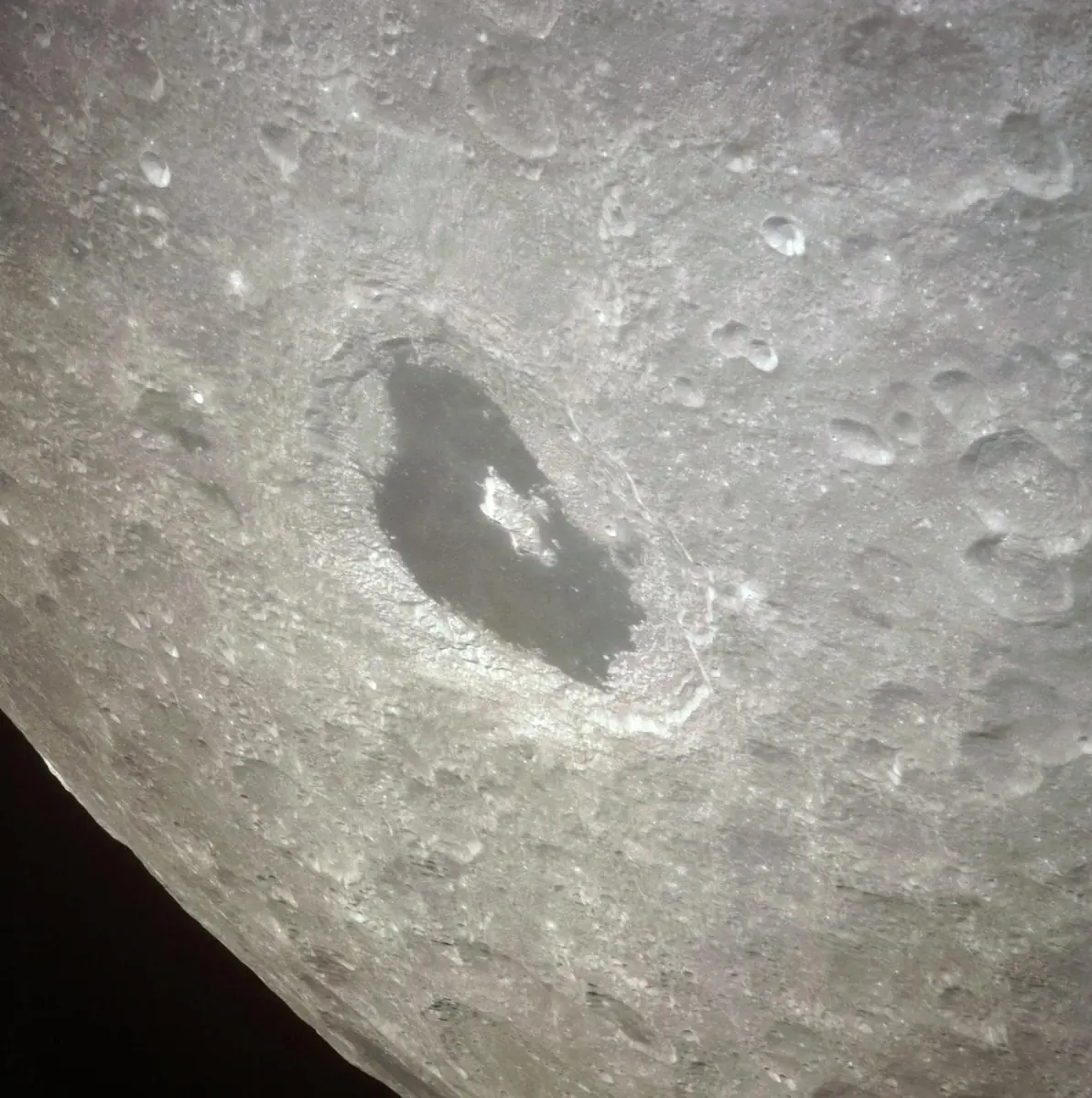
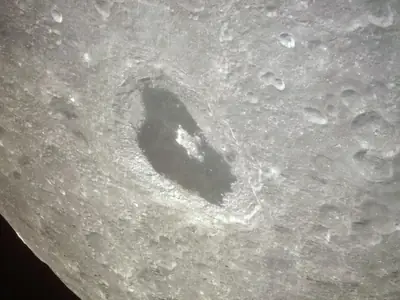 The far-side crater Tsiolkovsky during the lunar pass.
-
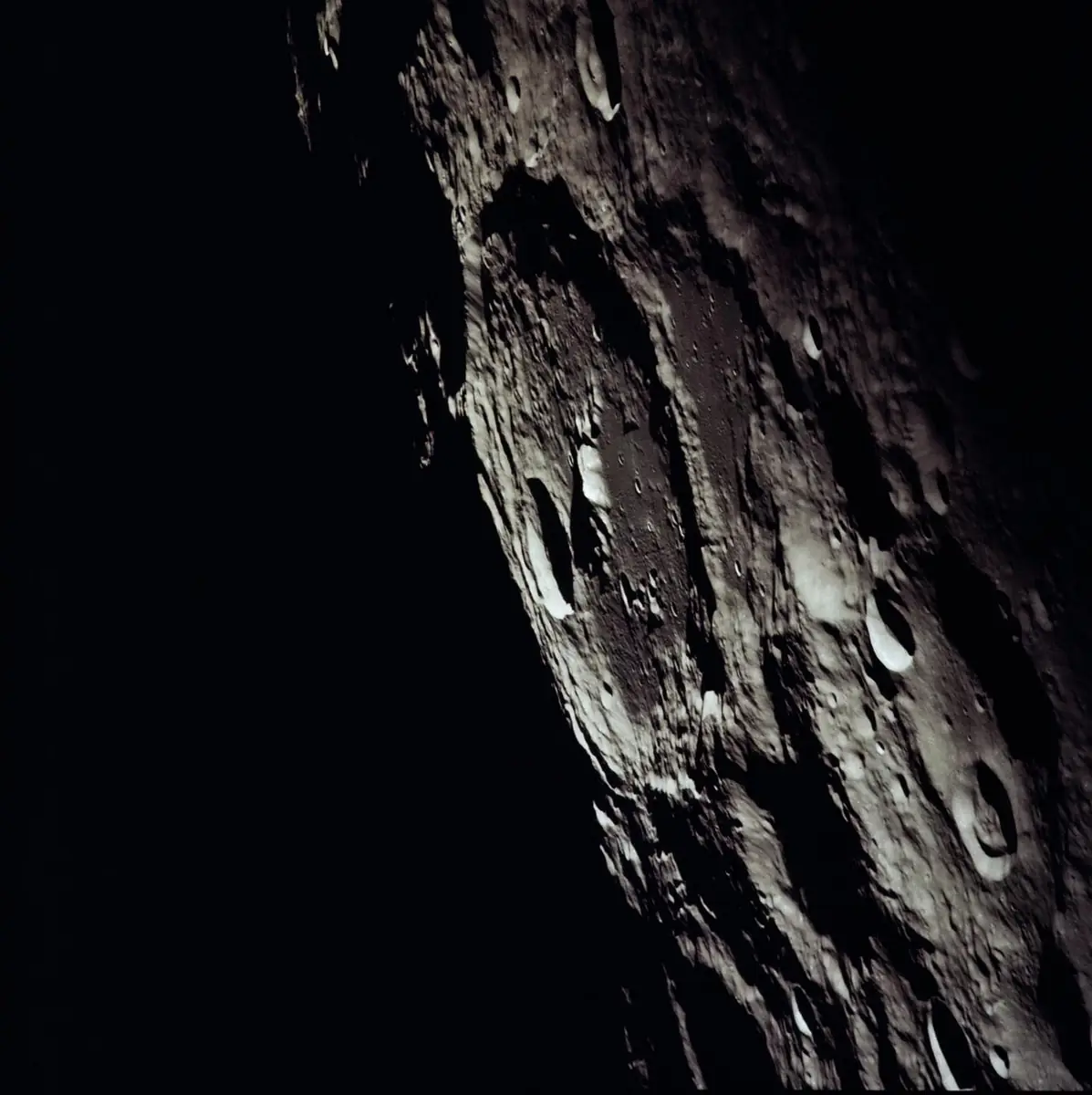
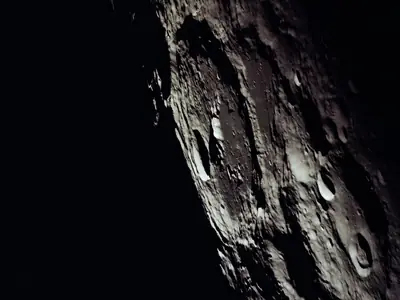 Far-side crater IAU 302, now Keeler, looking southeast.
-
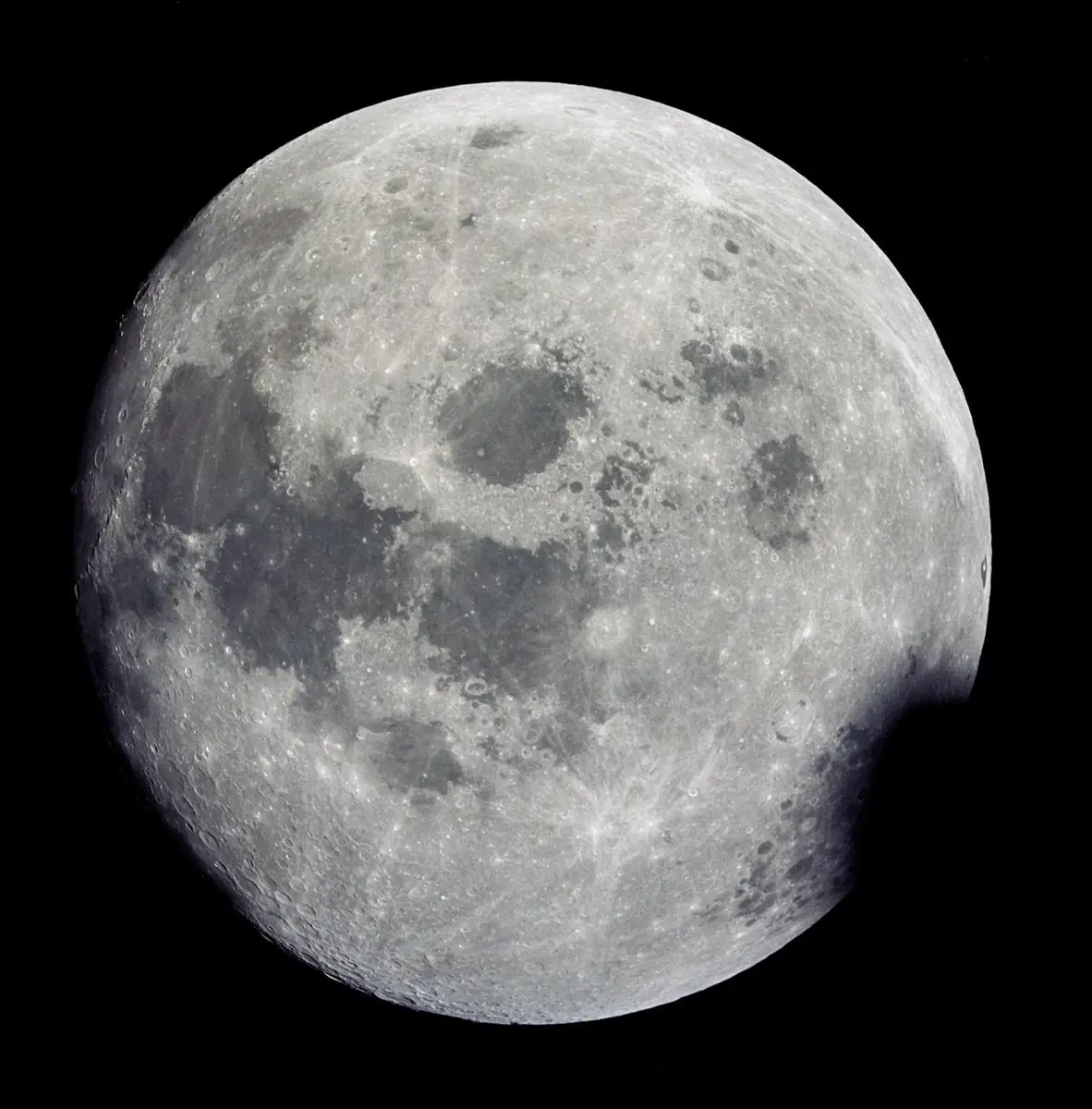
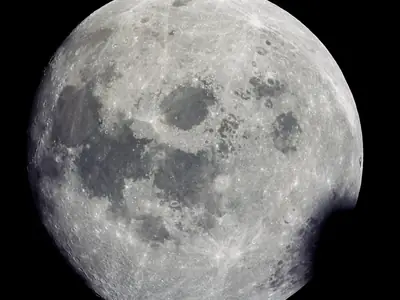 A near-full Moon on the way home.
-
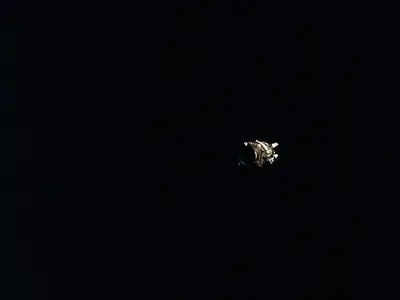 The damaged service module after jettison, with a whole panel blown away.
-
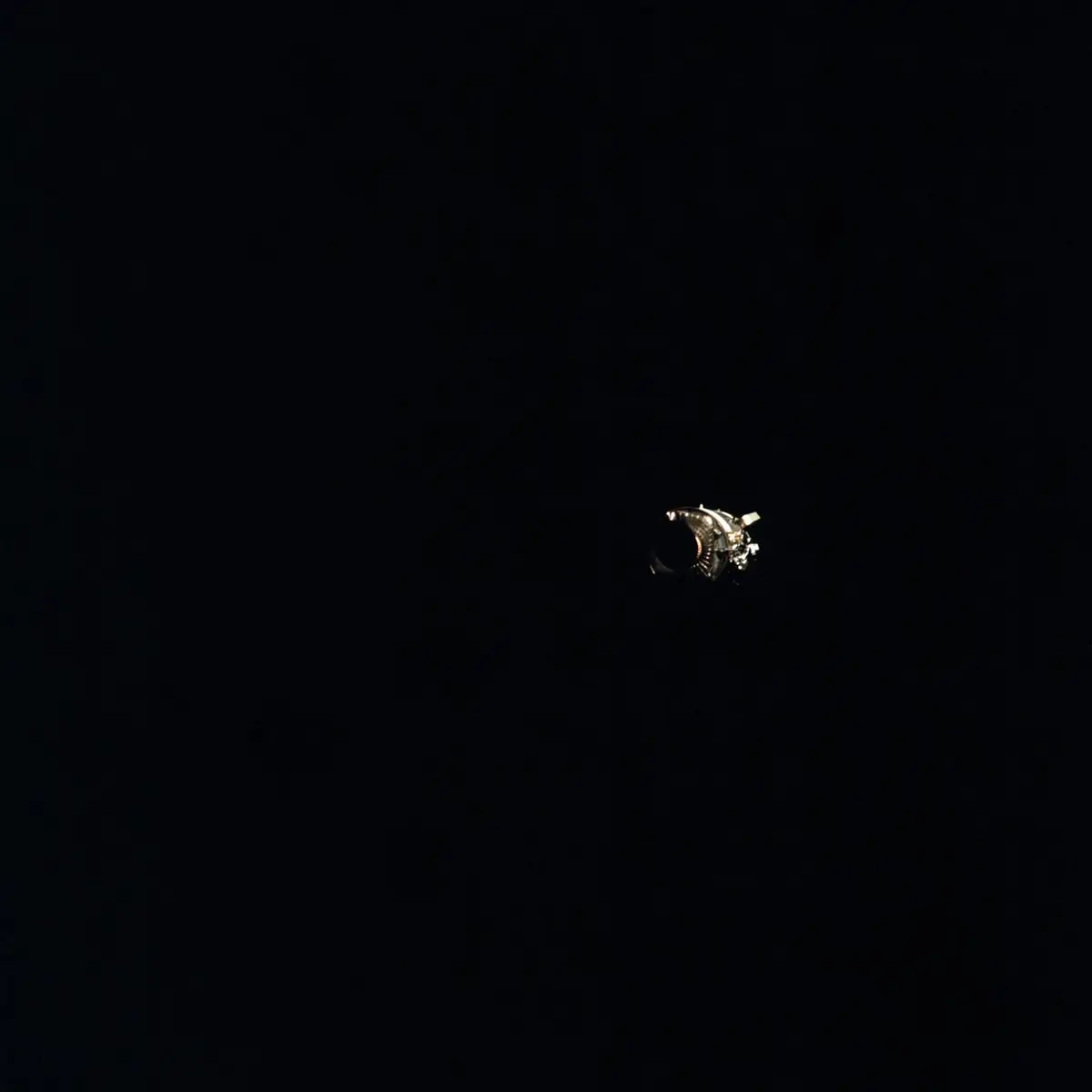
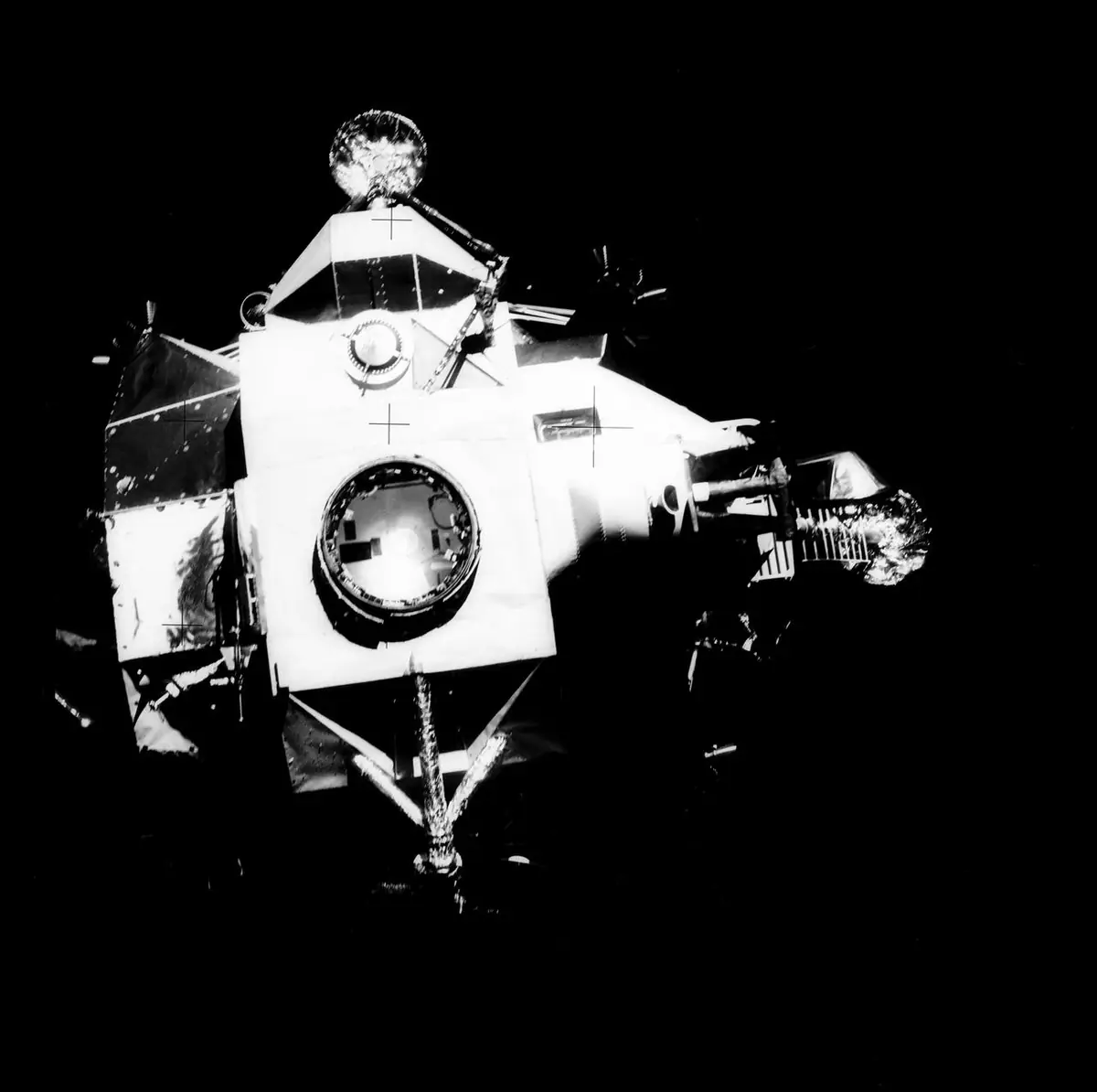
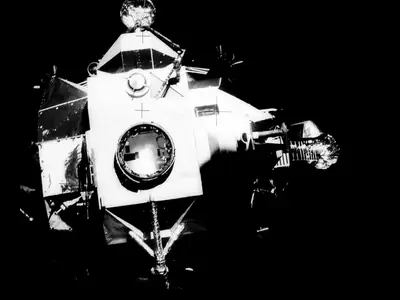 Aquarius moments after it was released, an hour before splashdown.
-
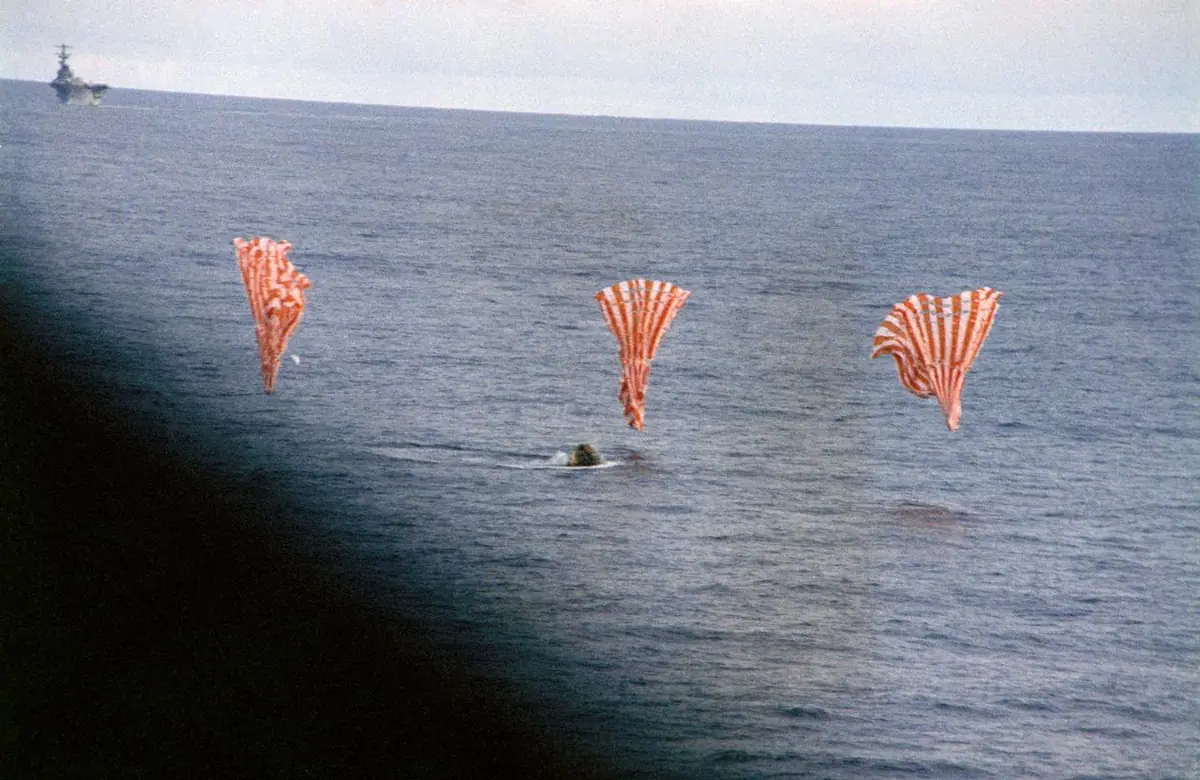
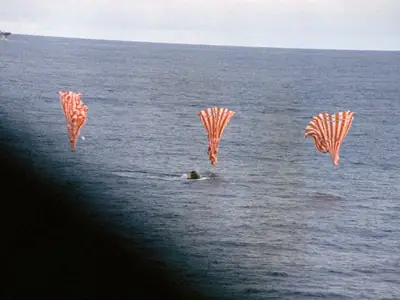 Odyssey splashes down in the South Pacific, 17 April 1970.
-
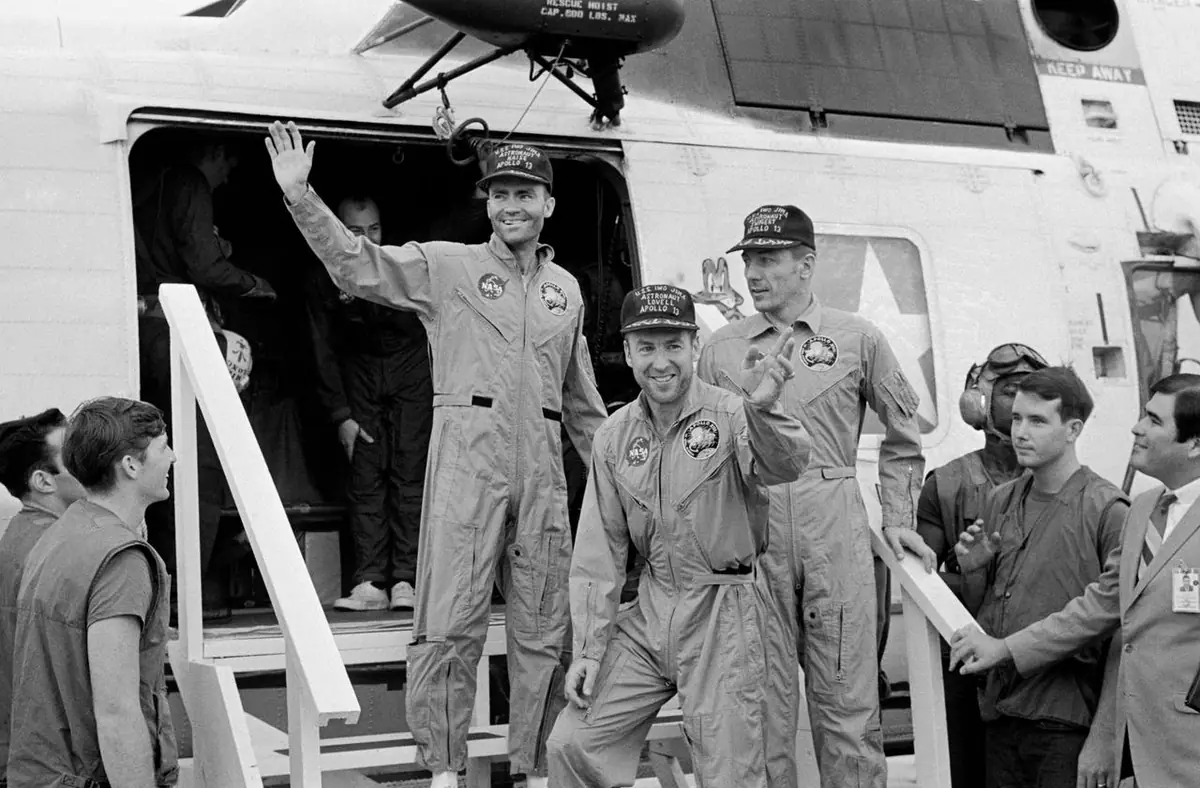
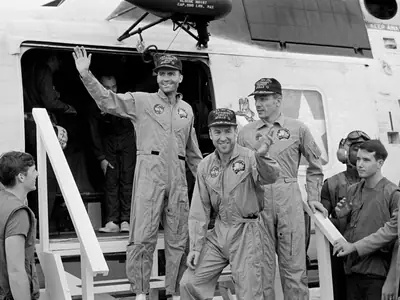 Haise, Lovell and Swigert step aboard USS Iwo Jima.
-
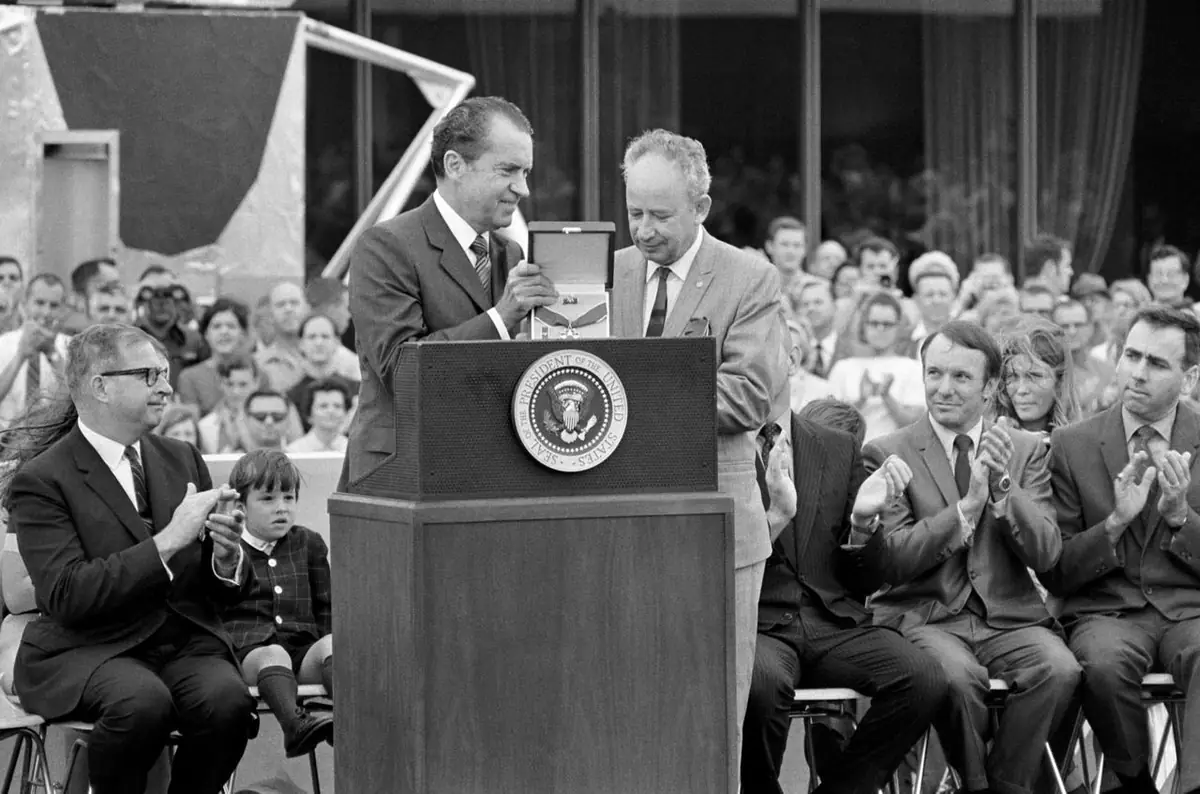
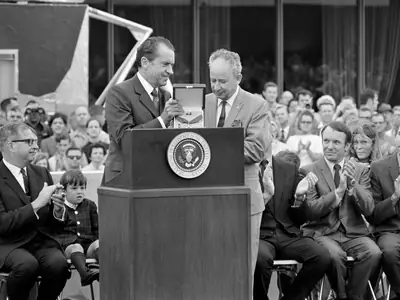 President Nixon presents the Medal of Freedom to the Mission Operations Team.
At a glance 10
-
Mission type
Planned as a Type H mission (H-2): a precision landing and systematic exploration of the Fra Mauro highlands. It became a lunar flyby.
-
Seventh crewed Apollo
The seventh crewed Apollo flight and the third attempt to land on the Moon.
-
Dates
Launched 11 April 1970 at 19:13:00 UTC; splashed down 17 April 1970 at 18:07:41 UTC.
-
Mission duration
142 h 54 min 41 s (5 days 22 h 54 min 41 s).
-
What happened
About 56 hours out, oxygen tank 2 in the service module failed. The crew used the lunar module Aquarius as a lifeboat, swung around the Moon and came home.
-
Spacecraft
Command and service module Odyssey (CSM-109) and lunar module Aquarius (LM-7), on Saturn V SA-508.
-
Farthest humans
At 00:21 UTC on 15 April 1970, 137 n mi (254 km158 miles) above the far side, the crew were 400,171 km248,655 miles from Earth, the farthest people had ever been.
-
Distance flown
541,103 n mi (about 1.00 million km0.62 million miles) by NASA's estimate.
-
The target
The hilly uplands north of the crater Fra Mauro, about 180 km110 miles east of Apollo 12.
-
A successful failure
NASA calls Apollo 13 a successful failure: the landing was lost, but the crew came home and the lessons reshaped the program.
Crew & team 13
-
Jim Lovell, commander
Captain, USN, born 25 March 1928 in Cleveland, Ohio; 42 at launch. Naval Academy 1952, selected 1962. His fourth flight, after Gemini 7, Gemini 12 and Apollo 8.
-
Jack Swigert, command module pilot
Born 30 August 1931 in Denver; 38 at launch. Degrees from Colorado, Rensselaer and Hartford; selected 1966. His first flight.
-
Fred Haise, lunar module pilot
Born 14 November 1933 in Biloxi, Mississippi; 36 at launch. University of Oklahoma aeronautical engineering (1959), selected 1966. His first flight.
-
Mattingly grounded
Ken Mattingly, the original command module pilot, was exposed to German measles (rubella) eight days before launch and had no immunity.
-
Who brought the measles
Backup lunar module pilot Charlie Duke exposed the crew to German measles.
-
A swap the day before launch
Swigert, the backup command module pilot, was named to the prime crew on 10 April, the day before launch.
-
Backup crew
John Young (commander), Jack Swigert (command module pilot) and Charlie Duke (lunar module pilot).
-
Mattingly's luck
Mattingly never caught the measles. He flew as command module pilot on Apollo 16 in 1972.
-
Traded places
Lovell's crew had been in line for Apollo 14; it swapped with Alan Shepard's crew to give Shepard more time to train.
-
Flight directors
Milt Windler, Gerry Griffin, Gene Kranz and Glynn Lunney ran the four shifts in Mission Control.
-
Capcoms
Joe Kerwin, Vance Brand, Jack Lousma, John Young and Ken Mattingly.
-
Support crew
Jack Lousma, Vance Brand and Bill Pogue.
-
Four flights, two Moons
Lovell became the first person to fly in space four times and the first to travel to the Moon twice, without ever landing.
Launch & Saturn V 12
-
Liftoff
19:13:00 UTC (2:13 p.m. EST) on 11 April 1970 from Launch Complex 39A, Kennedy Space Center.
-
Launch window
The window ran to 22:36 UTC, timed for a Sun 10° above the Fra Mauro horizon at landing.
-
Countdown
The terminal count began at T-28 h at 05:00 UTC on 10 April, with scheduled holds of 9 h 13 min at T-9 h and 1 h at T-3 h 30 min.
-
Weather
24.4 °C75.9 °F, 57% humidity, altocumulus at 5.8 km19,000 feet under full cirrostratus at 7.9 km26,000 feet; surface wind 12.2 knots from 105°.
-
Upper winds
Strongest winds on the way up: 108.13 knots (200 km/h124 mph) at 13.6 km44,540 feet.
-
Center engine out
The S-II second stage's center engine shut down 132 s early, at 5 min 30.6 s into the flight.
-
Pogo
The cause was pogo, a violent lengthwise vibration of the S-II's center engine.
-
Making up the shortfall
The other four S-II engines burned 34 s longer and the S-IVB 9 s longer, and the vehicle still reached its parking orbit.
-
Spent stages
The S-IC fell into the Atlantic 355.3 n mi (658 km409 miles) downrange and the S-II 2,452.6 n mi (4,542 km2,822 miles) downrange.
-
Parking orbit
100.3 × 99.3 n mi (186 × 184 km115 × 114 miles), inclined 32.547°, with a period of 88.19 min.
-
Translunar injection
After 1.5 Earth orbits the S-IVB burned 350.85 s from 2 h 35 min 46 s, reaching 10.83 km/s35,538 feet per second.
-
Catalog numbers
Odyssey was 1970-029A, the S-IVB 1970-029B and Aquarius, once undocked, 1970-029C.
Spacecraft 9
-
Odyssey
Command and service module CSM-109, built by North American Rockwell. The service module carried the oxygen tanks that fed the fuel cells, the crew's power and water.
-
Aquarius
Lunar module LM-7, built by Grumman. Designed to keep two men alive for two days, it kept three alive for about four.
-
A dropped tank
Oxygen tank 2 first sat in Apollo 10's service module. It was removed at Downey in October 1968 and accidentally dropped about 5 cm2 inches.
-
A tank that would not drain
After a countdown test on 25 March 1970, tank 2 would not empty normally. On 26 March technicians ran its heaters and fans for eight hours on 65-volt ground power to boil it off.
-
The wrong switches
The heater's thermostatic switches were rated for 28 V DC. Ground power had gone to 65 V in 1965, the switches were never changed, and they welded shut.
-
Unseen heat
The tank's temperature gauge read only up to 29 °C85 °F, so no one saw the heater tube reach about 540 °C1,000 °F, hot enough to damage the Teflon wire insulation.
-
The tank's serial
Oxygen tank 2 was serial number 10024X-TA0009.
-
Aquarius's batteries
The lunar module's batteries held 2,181 ampere-hours. By cutting consumption to about a fifth, the crew still had 20% left when Aquarius was cast off.
-
A plaque for Fra Mauro
Aquarius carried a plaque meant to stay on the Moon with the descent stage.
Flight & orbit 16
-
Docking
Odyssey docked with Aquarius at 3 h 19 min and pulled it from the S-IVB at 4 h 01 min.
-
Off free return
At 30 h 40 min a 3.49 s service engine burn put Apollo 13 on a hybrid path that would not bring it home unaided, lowering the planned closest approach to 60 n mi (111 km69 miles).
-
A warning sign
At 46 h 40 min the quantity gauge on oxygen tank 2 jumped from about 82% to off-scale high.
-
Last broadcast
At 55 h 46 min Lovell signed off a 49-minute TV broadcast. Nine minutes later, oxygen tank 2 blew up.
-
The stir
At 55 h 53 min 20 s, after a routine request from Mission Control, current reached the fans inside oxygen tank 2.
-
The bang
At 55 h 54 min 53.5 s (03:07:53 UTC on 14 April) the crew heard a bang, a main bus B undervolt alarm sounded and telemetry dropped out for 1.8 s.
-
“We've had a problem”
Swigert called: “Houston, we've had a problem here.” Lovell then reported a main B bus undervolt.
-
How far out
The explosion came about 322,000 km200,000 miles from Earth.
-
Venting
At 56 h 09 min Lovell reported gas venting into space from the service module.
-
Fuel cells lost
Fuel cell 1 went off line at 56 h 10 min, fuel cell 3 about half an hour later and fuel cell 2 at 58 h.
-
Into the lifeboat
By 58 h 40 min Aquarius was powered up, guidance had been handed over to it and Odyssey's systems were shut down.
-
Back to free return
At 61 h 29 min 43 s Aquarius's descent engine burned 34.23 s to put the spacecraft back on a free-return path.
-
Behind the Moon
Contact was lost from 77 h 08 min 35 s to 77 h 33 min 10 s, 24 min 35 s on the far side.
-
Speeding home
At 79 h 27 min 39 s, two hours after closest approach, the descent engine burned 263.82 s and added 860.5 ft/s (262 m/s860.5 feet per second) to aim for a Pacific splashdown.
-
Fixing the aim
A 14 s descent engine burn at about 105 h 18 min corrected errors left by the earlier burn.
-
Last correction
About six hours before entry a 21.5 s firing of Aquarius's thrusters added 3.2 ft/s (1.0 m/s3.2 feet per second).
Planned site 7
-
Fra Mauro
The target was the hilly uplands north of the crater Fra Mauro: rougher highland country than the maria where Apollo 11 and 12 landed.
-
Coordinates
Targeted at 3.617° S, 17.550° W.
-
Why there
Geologists wanted the Fra Mauro Formation, an extensive unit surrounding Mare Imbrium thought to be debris from the impact that formed the Imbrium basin.
-
Chosen late
NASA announced the site on 10 December 1969, once Apollo 12's precision landing and orbital photos of Fra Mauro had given it confidence.
-
Planned stay
A ten-day mission with 33.5 hours on the surface.
-
Ranger 7 nearby
Ranger 7, which crashed on the Moon in July 1964, lies about 130 n mi (240 km150 miles) south-southwest of the site.
-
Reassigned
Fra Mauro went to Apollo 14, which landed in February 1971 about 2.5 km1.6 miles from Apollo 13's target point.
Planned moonwalks 9
-
Two moonwalks
Lovell and Haise planned two moonwalks of about four hours each.
-
Fifth and sixth
Lovell would have been the fifth person on the Moon and Haise the sixth. Alan Shepard and Edgar Mitchell took those places on Apollo 14.
-
First EVA plan
Set up the ALSEP science station and explore the area near the lunar module.
-
Solar wind sail
They were to deploy and retrieve a solar wind collector, as Apollo 11 and 12 had done.
-
Traverse map
NASA's traverse plan marked the first EVA in red and the second in black, with yellow extensions if time allowed.
-
Volcano school
Lovell, Haise, Young and Duke trained on the Big Island of Hawaii, 17-20 December 1969, with National Park Service, NASA and USGS geologists.
-
Timeline rehearsal
Lovell and Haise walked through their EVA timeline at Kennedy Space Center on 28 January 1970.
-
Subsurface temperatures
Haise inspected a tube meant for taking subsurface temperatures on the Moon.
-
Backpack oxygen
Oxygen was the least of the crew's worries: Aquarius also carried the backpack oxygen meant for the first moonwalk.
Science 10
-
ALSEP that never flew
Five experiments: a charged particle environment detector (its first flight), a cold cathode gauge for the lunar atmosphere, heat flow probes, a passive seismometer and a dust detector.
-
Plutonium power
The station was to run on a radioisotope generator heated by the decay of plutonium-238.
-
A rocket as a hammer
Apollo 13's S-IVB was steered into the Moon so the seismometer Apollo 12 had left could record the blow.
-
Impact
It struck at 77 h 56 min 40 s (01:09:40 UTC on 15 April) with a mass of 13,426 kg (29,599 lb) at 2.58 km/s8,465 feet per second.
-
The Moon rang
The seismic signal lasted 3 h 20 min, and the Apollo 12 seismometer's gain had to be turned down.
-
Distance to the sensor
The impact was 73 n mi (135 km84 miles) from the Apollo 12 seismometer.
-
Ions from the blast
Apollo 12's suprathermal ion detector count jumped from 0 to 2,500 and fell back; debris was thought to reach about 61 km200,000 feet above the surface.
-
The crater today
The Lunar Reconnaissance Orbiter found the crater, about 30 m100 feet across, at 2.55° S, 27.88° W, north of Mare Cognitum.
-
A calibration shot
Impacts like this gave a known energy at a known place, a calibration signal for the Apollo seismic network.
-
Done anyway
Three experiments were completed: lightning phenomena, Earth photography and the S-IVB impact.
Rocks & findings 8
-
No samples
Apollo 13 brought back no lunar samples.
-
What they were after
Fra Mauro breccias, expected to date the Imbrium impact. Apollo 14 collected 42.28 kg from the same region.
-
Big Bertha
Apollo 14's Fra Mauro haul included Big Bertha, a 9 kg breccia that may hold a fragment of Earth.
-
Practice scooping
Lovell trained in December 1969 with the scoop from the Apollo lunar hand tools.
-
The fuel cask
The station's plutonium fuel cask rode home with Aquarius, which was aimed so the cask would fall into deep water near the Tonga Trench.
-
Seen from Houston
A telescope at the Manned Spacecraft Center caught the spacecraft, the spent S-IVB and the expanding cloud of lost oxygen.
-
Reproducing the fire
In June 1970 tests at the Manned Spacecraft Center simulated the detanking, fusing a thermal switch, and reproduced fire spreading inside a full-scale oxygen tank.
-
Far side in pictures
The crew photographed far-side craters including Tsiolkovsky and IAU crater 302, since named Keeler.
Odyssey 8
-
The orbit that never was
The command module pilot was to stay in lunar orbit making geologic observations and photographing future landing sites.
-
Swigert at the switches
Swigert, on the crew for only a day before launch, acknowledged Mission Control's request to stir the tanks moments before the explosion.
-
Odyssey goes cold
From about 58 h 40 min Odyssey's systems were off, keeping its batteries for re-entry.
-
Near freezing
Cabin temperature fell to 3 °C38 °F and condensation formed on the walls.
-
Rain in the cabin
Lovell described it raining inside the command module as it decelerated through the atmosphere.
-
Power-up in three days
Flight controllers wrote Odyssey's power-up procedures in three days instead of the usual three months.
-
Saved by Apollo 1
Safeguards added after the January 1967 Apollo 1 fire kept the cold, wet wiring from arcing when Odyssey came back to life.
-
Borrowed power
Aquarius's batteries were used to recharge Odyssey's re-entry batteries before the command module was brought back up.
Return & recovery 16
-
Six ounces a day
Water was rationed to six ounces (about 180 ml) per person per day, a fifth of normal intake.
-
Water left
They finished with 12.8 kg (28.2 lb) of water, about 9% of the total.
-
Weight lost
The crew lost 14.3 kg (31.5 lb) between them, Lovell alone 6.4 kg (14 lb), nearly 50% more than any other Apollo crew.
-
Carbon dioxide
After a day and a half a warning showed carbon dioxide building up: Aquarius's own canisters were not enough for three people.
-
The mailbox
Engineers on the ground devised an adapter so the command module's lithium hydroxide canisters could work in Aquarius, built from plastic bags, cardboard and tape.
-
Canisters
Odyssey carried 16 lithium hydroxide canisters, each good for about 12 hours.
-
Service module cast off
At 138 h 01 min 48 s the crew released the service module and saw that a whole panel had been blown away.
-
Farewell, Aquarius
Aquarius was released at 141 h 30 min, about 70 minutes before entry.
-
Oxygen to spare
12.9 kg (28.5 lb) of oxygen remained at lunar module jettison, more than half of what was available after the explosion.
-
Entry
Entry interface at 142 h 40 min 46 s, 122 km400,000 feet up at 11.04 km/s36,211 feet per second.
-
Splashdown
18:07:41 UTC on 17 April 1970 at 21.63° S, 165.37° W, southeast of Samoa, 1.0 n mi (1.9 km1.2 miles) from the target point.
-
Recovery
USS Iwo Jima was 3.5 n mi (6.5 km4.0 miles) away; a helicopter had the crew aboard about 45 minutes after splashdown.
-
Odyssey's weight
The command module weighed an estimated 5,050 kg (11,132.9 lb) at splashdown.
-
Aquarius's end
Pieces of Aquarius fell into the open sea between Samoa and New Zealand.
-
Seen from an airliner
A passenger on an Air New Zealand DC-8 between Fiji and Auckland photographed the service and lunar modules entering the atmosphere.
-
Haise's fever
Haise came home with a urinary tract infection and a fever.
Moments & legacy 16
-
Medals
President Nixon gave the Presidential Medal of Freedom to the Mission Operations Team in Houston on 18 April 1970, accepted by Sigurd Sjoberg, and to the crew in Hawaii.
-
The review board
Langley director Edgar Cortright chaired the Apollo 13 Review Board, set up on 17 April 1970; Neil Armstrong was a member. The report came out on 15 June 1970.
-
The verdict
Not a chance failure but “an unusual combination of mistakes coupled with a somewhat deficient and unforgiving design.”
-
What changed
From Apollo 14: a third oxygen tank in a different bay, upgraded thermostats, no stirring fans in the tanks and wiring sheathed in stainless steel.
-
Apollo 14 delayed
The investigation and redesign moved Apollo 14 from October 1970 to January 1971.
-
The patch
Apollo's horses race from Earth to the Moon under the motto Ex Luna, Scientia: “From the Moon, Knowledge.”
-
No names
With Apollo 11's, it is one of only two Apollo crew patches without the crew's names, so it needed no change when Mattingly was replaced.
-
The record falls
The crew's distance record stood for 56 years, until Artemis II passed it on 6 April 2026.
-
Artemis II's mark
Orion reached 406,771 km252,756 miles from Earth, 6,600 km4,101 miles beyond Apollo 13.
-
Where Odyssey is
Odyssey is at the Cosmosphere in Hutchinson, Kansas, after years on display in Paris.
-
Lost Moon
Lovell's book Lost Moon (1994, with Jeffrey Kluger) became Ron Howard's film Apollo 13 (1995).
-
Failure is not an option
The line was written for the 1995 film; Gene Kranz later used it as the title of his memoir.
-
Lovell
Jim Lovell died on 7 August 2025 in Lake Forest, Illinois, aged 97.
-
Swigert
Elected to Congress from Colorado in November 1982, Swigert died of cancer on 27 December 1982, before taking office.
-
Haise
Haise later flew the Space Shuttle Enterprise's approach and landing tests in 1977. He is the last surviving member of the crew (checked November 2026).
-
Crew-13
The 2026 patch of NASA's SpaceX Crew-13, the first NASA crew numbered 13 since, honors the Apollo 13 insignia.
Seven missions side by side
Figures from NASA's Apollo by the Numbers. Select a mission to open its dossier.
| Measure | Apollo 11 | Apollo 12 | Apollo 13 | Apollo 14 | Apollo 15 | Apollo 16 | Apollo 17 |
|---|---|---|---|---|---|---|---|
| Landing (UTC) | 20 July 1969 | 19 November 1969 | did not land | 5 February 1971 | 30 July 1971 | 21 April 1972 | 11 December 1972 |
| Landing site | Mare Tranquillitatis | Oceanus Procellarum | Fra Mauro highlands (planned) | Fra Mauro highlands | Hadley–Apennine | Descartes Highlands | Taurus–Littrow valley |
| Lunar module | Eagle (LM-5) | Intrepid (LM-6) | Aquarius (LM-7) | Antares (LM-8) | Falcon (LM-10) | Orion (LM-11) | Challenger (LM-12) |
| Command module | Columbia (CM-107) | Yankee Clipper (CM-108) | Odyssey (CM-109) | Kitty Hawk (CM-110) | Endeavour (CM-112) | Casper (CM-113) | America (CM-114) |
| Commander | Neil Armstrong | Pete Conrad | Jim Lovell | Alan Shepard | David Scott | John Young | Gene Cernan |
| Lunar module pilot | Buzz Aldrin | Alan Bean | Fred Haise | Edgar Mitchell | Jim Irwin | Charlie Duke | Harrison Schmitt |
| Command module pilot | Michael Collins | Dick Gordon | Jack Swigert | Stuart Roosa | Al Worden | Ken Mattingly | Ron Evans |
| Mission type | G | H-1 | H-2 | H-3 | J-1 | J-2 | J-3 |
| Time on the Moon | 21 h 36 min | 31 h 31 min | none | 33 h 30 min | 66 h 54 min | 71 h 2 min | 74 h 59 min |
| Moonwalks | 1 · 2 h 31 min | 2 · 7 h 45 min | none | 2 · 9 h 22 min | 3 · 18 h 34 min | 3 · 20 h 14 min | 3 · 22 h 3 min |
| Samples | 21.55 kg | 34.35 kg | none | 42.28 kg | 77.31 kg | 95.71 kg | 110.52 kg |
| Farthest from the lunar module | 60 m200 feet | ≈ 410 m1,350 feet | none | ≈ 1.45 km0.9 miles | ≈ 5.0 km3.1 miles | ≈ 4.6 km2.9 miles | ≈ 7.6 km4.7 miles |
| Rover distance | none | none | none | none | 27.9 km17.3 miles | 26.9 km16.7 miles | 35.7 km22.2 miles |
| Sun at landing | 10.8° | 5.1° | none | 10.3° | 12.2° | 14.8° | 13.0° |
| Lunar orbits | 30 | 45 | none (flyby) | 34 | 74 | 64 | 75 |
| Mission length | 8 d 3 h 18 min | 10 d 4 h 36 min | 5 d 22 h 54 min | 9 d 0 h 1 min | 12 d 7 h 11 min | 11 d 1 h 51 min | 12 d 13 h 51 min |
| Recovery ship | USS Hornet | USS Hornet | USS Iwo Jima | USS New Orleans | USS Okinawa | USS Ticonderoga | USS Ticonderoga |
| Sourced facts | 130 | 113 | 134 | 112 | 110 | 111 | 112 |
Sources and method
27 sources, how the Moon is drawn, and photo credits
Source
Apollo Preliminary Science Reports, NASA SP-214, SP-235, SP-272, SP-289, SP-315, SP-330
All sourcesSource
A. Saunders, The Mystery Behind Alan Shepard's 'Moon Shot' Revealed, USGA, Feb 2021
All sourcesSource
All sourcesSource
NASA/JPL, First Confirmed Capture into Earth Orbit Is Likely Apollo Rocket (2002)
All sourcesSource
NASA History, 50 Years Ago: Apollo 13 Review Board Report (on the Cortright report, June 1970)
All sourcesSource
NASA, Acting NASA Administrator Reflects on Legacy of Astronaut Jim Lovell, Aug 2025
All sourcesSource
All sources